
Speakers
Media Contact
Eric Mann
Director of Public Information
404-679-4501 x4503
emann@commissioncu.org
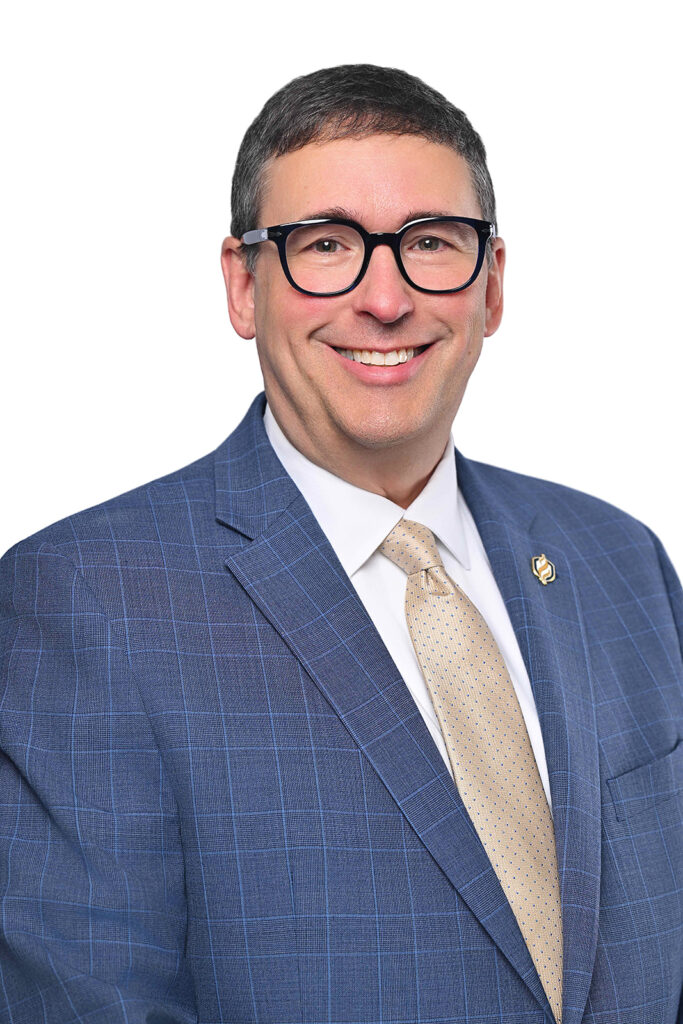
Dr. Stephen L. Pruitt
Dr. Stephen L. Pruitt
Dr. Stephen L. Pruitt is President of The Commission on Colleges and Universities.
Dr. Stephen L. Pruitt is President of The Commission on Colleges and Universities, which he has led since August 2025. He brings more than three decades of education experience, including service as president of the Southern Regional Education Board, commissioner of education for the Kentucky Department of Education, and chief of staff and associate state superintendent for the Georgia Department of Education.
Dr. Pruitt holds a Ph.D. in chemistry education from Auburn University, a Master of Education in secondary science from the University of West Georgia, and a Bachelor of Science in chemistry from the University of North Georgia — all SACSCOC-accredited institutions.
Speaking Topics:
- The role and future of institutional accreditation
- Accountability, transparency, and public confidence in higher education
- Alignment between higher education and workforce needs
- State and federal education policy
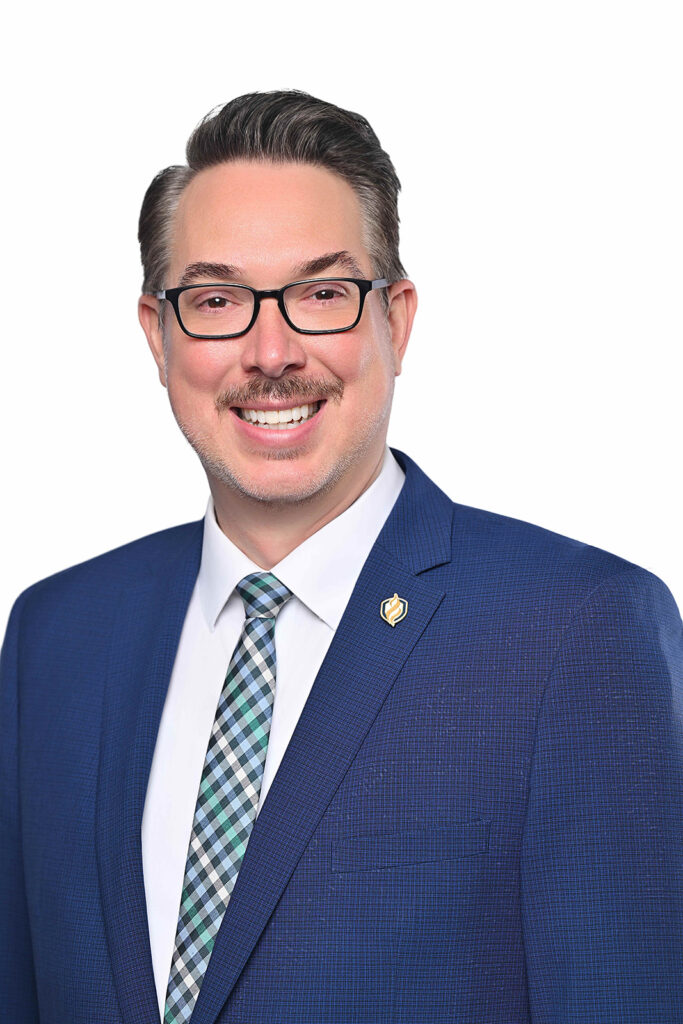
Dr. Geoffrey C. Klein
Dr. Geoffrey C. Klein
Dr. Geoffrey C. Klein is Chief of Staff and Vice President of The Commission on Colleges and Universities.
Dr. Geoffrey C. Klein is Chief of Staff and Vice President of The Commission on Colleges and Universities, where he has served as a vice president since 2021. He has worked in accreditation as a faculty member, institutional liaison, peer evaluator, trustee, and consultant, and previously served as Vice Provost for Research, Graduate Studies, and Assessment at Christopher Newport University.
He came to the Commission from Christopher Newport University in Newport News, Virginia, where he was Vice Provost for Research, Graduate Studies, and Assessment and served as the university’s SACSCOC liaison, leading the institution through its 2017 reaffirmation. He joined the CNU faculty as a chemistry professor, received the university’s inaugural Faculty Excellence Award for Teaching, and secured more than $2.6 million in grants supporting his research and students.
Dr. Klein holds a Ph.D. in analytical chemistry from Florida State University and a Bachelor of Science in chemistry from the College of William & Mary.
Speaking Topics:
- The reaffirmation and substantive change processes
- Peer review and evaluator preparation
- Institutional assessment and quality improvement
- How accreditation supports innovation at member institutions
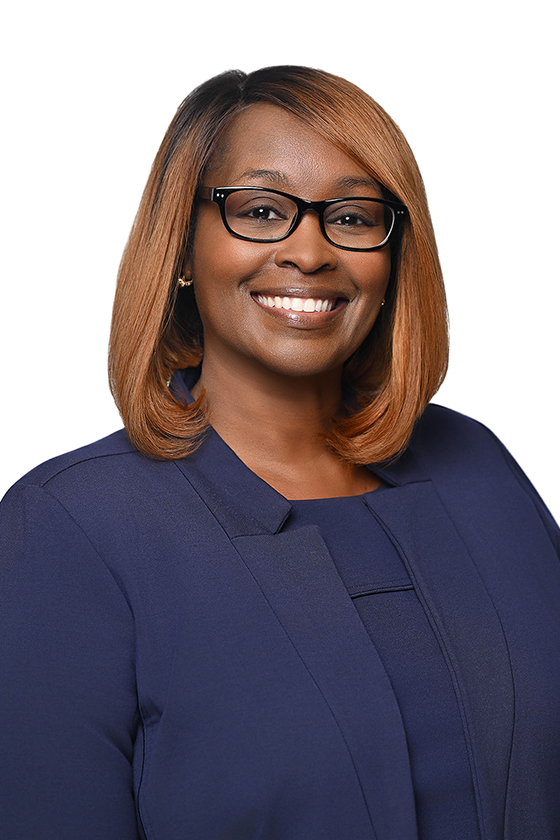
Dr. Rae Borden
Dr. Rae Borden
Dr. Rae Borden is Director of Legal and Governmental Affairs, and Commission Support for The Commission on Colleges and Universities.
Dr. Rae Borden is Director of Legal and Governmental Affairs, and Commission Support (OLGA) for The Commission on Colleges and Universities. She coordinates the Compliance and Reports committees, supports the Executive Council, Board of Trustees, and College Delegate Assembly, and oversees the organization’s federal and national recognition processes. She began her 25-year career in higher education at SACSCOC.
Dr. Borden holds a B.A. in communications from Southeastern Louisiana University, an MBA in human resources management from Keller Graduate School of Management, and an Ed.D. in organizational leadership from Nova Southeastern University.
Speaking Topics:
- How accreditors are themselves reviewed and recognized
- Commission governance: the Board of Trustees, Executive Council, and College Delegate Assembly
- The compliance and reports review process, and how institutions prepare for it
- Preparing for accreditation review from the campus side
Branding & Standards

Frequently Asked Questions
The Commission's Name
What should we call you?
Effective September 1, 2026, SACSCOC does business as The Commission on Colleges and Universities. On first reference, use the full name; after that, “The Commission.”
Is SACSCOC gone?
No. SACSCOC remains the name of the accreditation itself, and accredited institutions continue to carry the SACSCOC seal. The new name applies to the organization, not to the accreditation it grants.
How should we describe an institution’s accreditation in a story?
Write that the institution is accredited by SACSCOC, or that it is accredited by SACSCOC, the accreditation granted by The Commission on Colleges and Universities. Member institutions were not required to change their existing accreditation statements.
Did anything about accreditation change with the new name?
No. The standards, review processes, and decision-making authority are unchanged. Introducing The Commission.
Verifying An Institutions Status
How do I confirm whether an institution is accredited?
Search the institution database at Find an Institution. It is the authoritative public record of an institution’s current status. If the answer isn’t clear, contact our media office rather than relying on the institution’s own description.
What do the different statuses mean?
- Accredited: the institution meets The Commission’s standards.
- Candidate: the institution is progressing toward accreditation but is not yet accredited.
- Warning and Probation: the institution remains accredited but has been found out of compliance and must address specific issues by a deadline.
Is Probation the same as losing accreditation?
No. An institution on Probation is still accredited, and its students remain eligible for federal financial aid.
What happens to students if an institution loses accreditation?
An institution that loses accreditation loses eligibility to participate in federal student aid programs, and its students may face difficulty transferring credit. Institutions that close are expected to arrange for a teach-out so enrolled students can complete their programs.
Where can I find past actions on an institution?
Recent Board actions and disclosure statements for institutions on sanction are published here: Accreditation Actions and Disclosure Statements.
Decisions and Process
When does the Board meet, and when are decisions announced?
The Board of Trustees meets in June and December. Actions are posted here: Accreditation Actions and Disclosure Statements, within days of the meeting.
Can I get an institution’s self-study, committee report, or response?
These are documents of the institution and the review process, and The Commission does not release them. Institutions may choose to release their own materials, and public institutions may be subject to state open-records laws.
Why won’t you comment on a specific review while it’s underway?
Accreditation decisions are made by the Board of Trustees after a peer-review process. Commenting on a review before the Board acts would compromise that process and prejudge an outcome. Once the Board acts, The Commission publishes the decision.
How does someone file a complaint or a third-party comment?
Complaints about an institution’s compliance with The Commission’s standards are handled under the Complaint Policy. Third-party comments on institutions under review are accepted on a published schedule. The two processes are distinct, and the policies explain how each submission is reviewed and shared.
Authority and Scope
Who oversees the Commission?
The Commission is recognized by the U.S. Department of Education and by the Council for Higher Education Accreditation (CHEA), each of which reviews accreditors on its own cycle. Its governing bodies are the Board of Trustees and the College Delegate Assembly, made up of representatives of member institutions.
Is accreditation required for federal financial aid?
Accreditation by a federally recognized accreditor is one of three requirements for an institution to participate in federal student aid programs, along with state authorization and approval by the U.S. Department of Education.
Does The Commission set tuition, curricula, or admissions policy?
No. The Commission evaluates whether institutions meet its standards. It does not set tuition, design curricula, approve individual courses or faculty hires, rank institutions, or resolve individual student disputes over grades, admission, or discipline.
Is The Commission a regional accreditor?
No. Federal regulation eliminated the distinction between regional and national accreditors, and The Commission accredits institutions across the United States and internationally.
How many institutions does The Commission accredit?
The Commission has more than 780 member and candidate colleges and universities, including research universities, community colleges, historically Black colleges and universities, Hispanic-serving institutions, seminaries, and online institutions.
Working With Us
Who do I contact, and how fast will I hear back?
Eric Mann, Director of Public Information,
404-679-4501 x4503
emann@commissioncu.org
We will typically respond to media inquiries within two business days. For deadline inquiries, note your deadline in the subject line.
Can I speak with Dr. Pruitt or another Commission leader?
Interview requests go through the media office. Bios and speaking topics for available spokespeople are on this page here.
Do you do background conversations?
We are glad to help reporters understand accreditation processes and terminology. Attribution should be agreed on before the conversation, not after.
Will you review a passage for accuracy before publication?
Yes. We will check factual statements about accreditation, an institution’s status, or Commission processes. We do not review or approve the rest of a story.
Can I use the Commission’s logo?
Yes, to identify The Commission in news coverage. Download it from the Media Hub and use it unaltered, following the brand standards posted there. It may not be used in a way that implies endorsement or affiliation.
What don’t you comment on?
Current, future, or pending reviews and Board deliberations, personnel matters, litigation, and the internal affairs of member institutions.